

Stability in Chaos
Noise fades. Work takes center stage.

Whew, boy.
So last week, the Supreme Court struck down the majority of Trump's tariffs. As many of us know by now, it was smart to wait a few minutes before breaking out the champagne. Because things have gone sideways... again... as usual. Trump has spent the last several days throwing tantrums online while his goons find new laws and loopholes for him to keep his tariff racket going. Well, big surprise.
War with Iran looms over us again.
If that weren't enough, a record blizzard has knocked out power to more than 600,000 in the northeast and made travel almost impossible. It's another sign that the climate crisis doesn't just mean "warmer weather," but more chaos.
Honestly, it's hard to believe that just a few weeks ago, Minneapolis and Greenland were the main stories. Now, they feel like distant memories. This is life in collapse. Every few weeks, a fresh batch of crises rises up. In the midst of all this, some agency or organization always releases a new report telling us the world has entered a state of water bankruptcy, or that we're breaking more temperature records...
However, some things don't change.
Some things stay the same.
Our need for food, clothing, water, and shelter... That stays the same, more or less. The strategies and plans we develop for emergencies... those evolve, but we decide them. Plans offer stability, even comfort. It doesn't really matter whether shortages are caused by a disaster, or by disastrous trade policies. Either way, you're ready. You can take in the news and process the headlines, with a little less anxiety.
You can work as fast or slow as you like.
In the end, just knowing what to do and how to do it, that means a lot. That's what I keep remembering as I work on the guide.
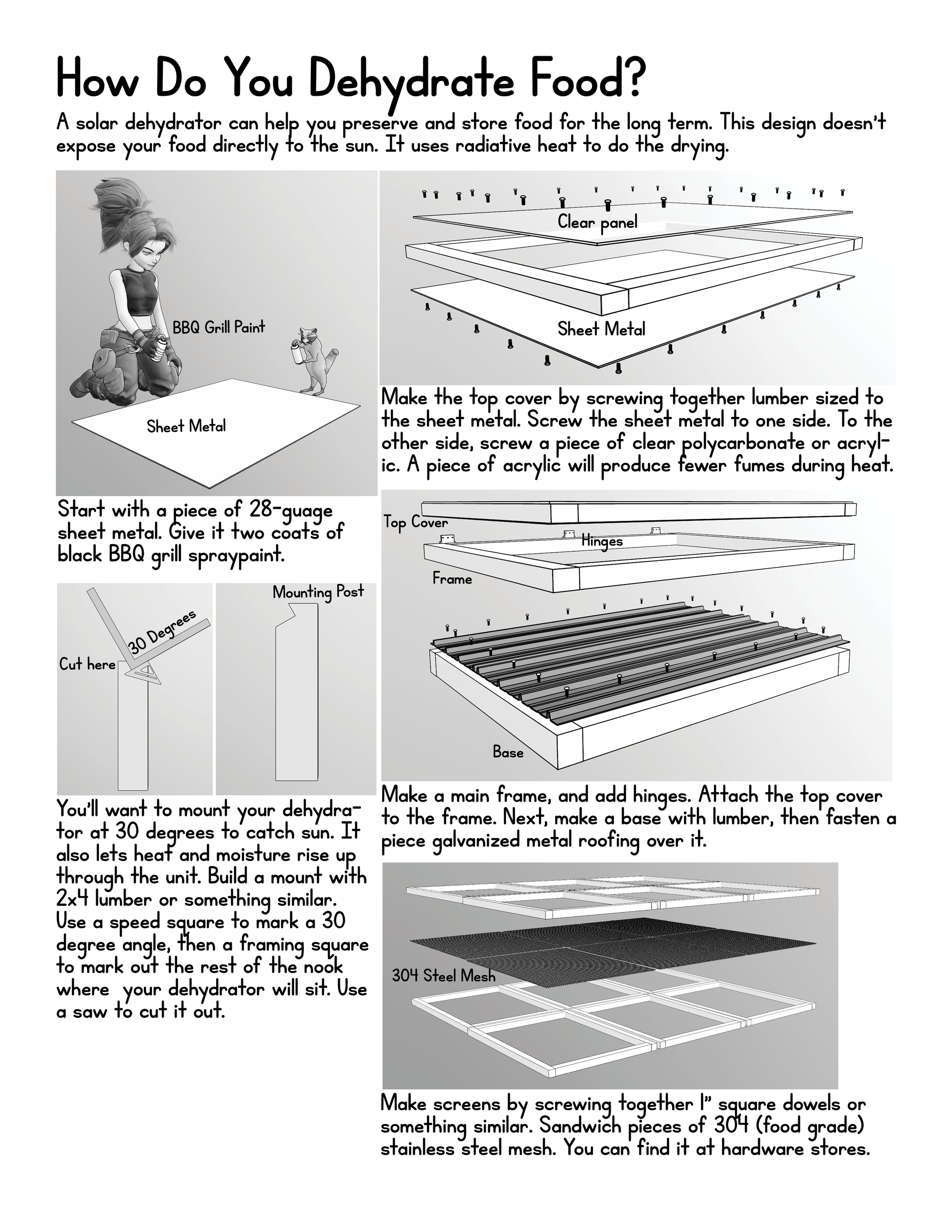
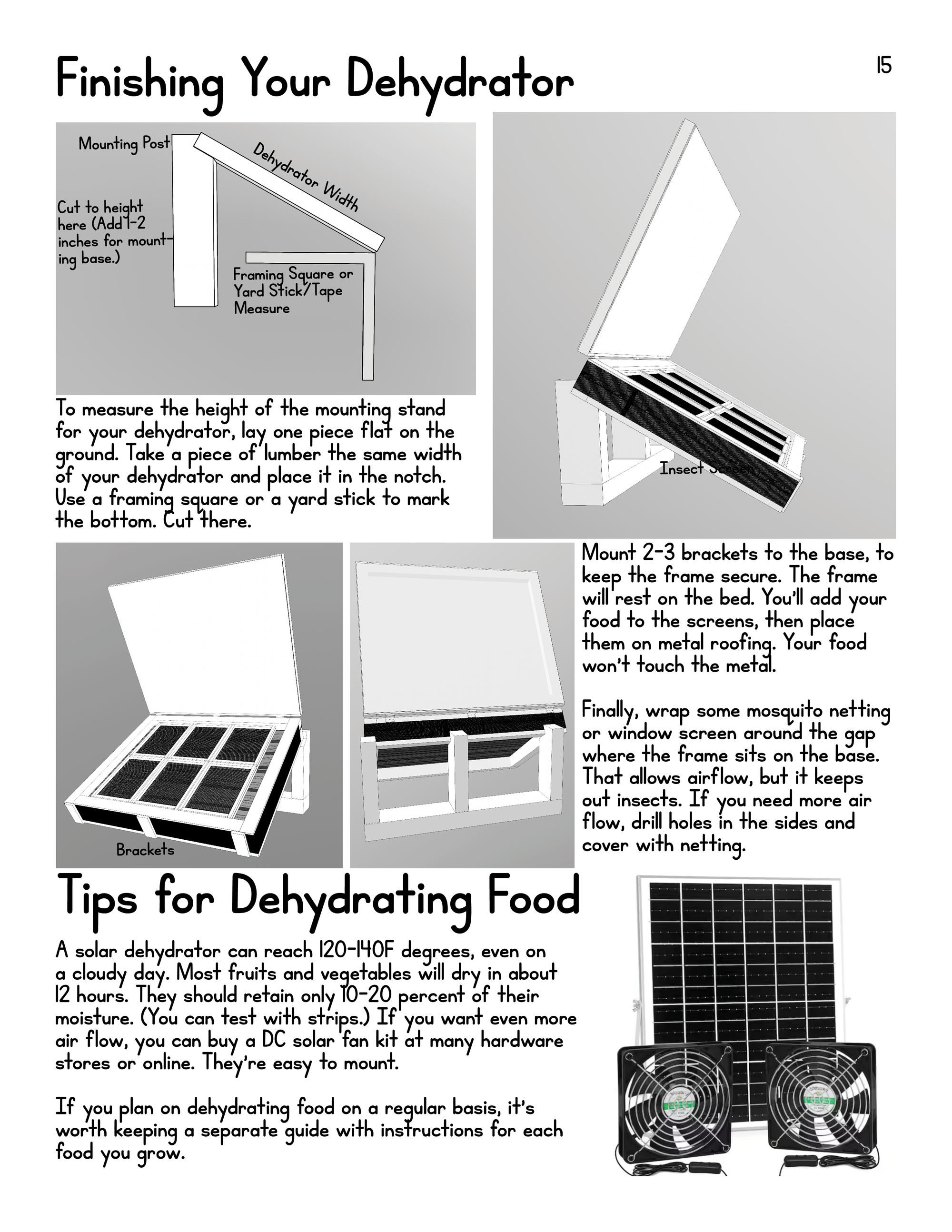
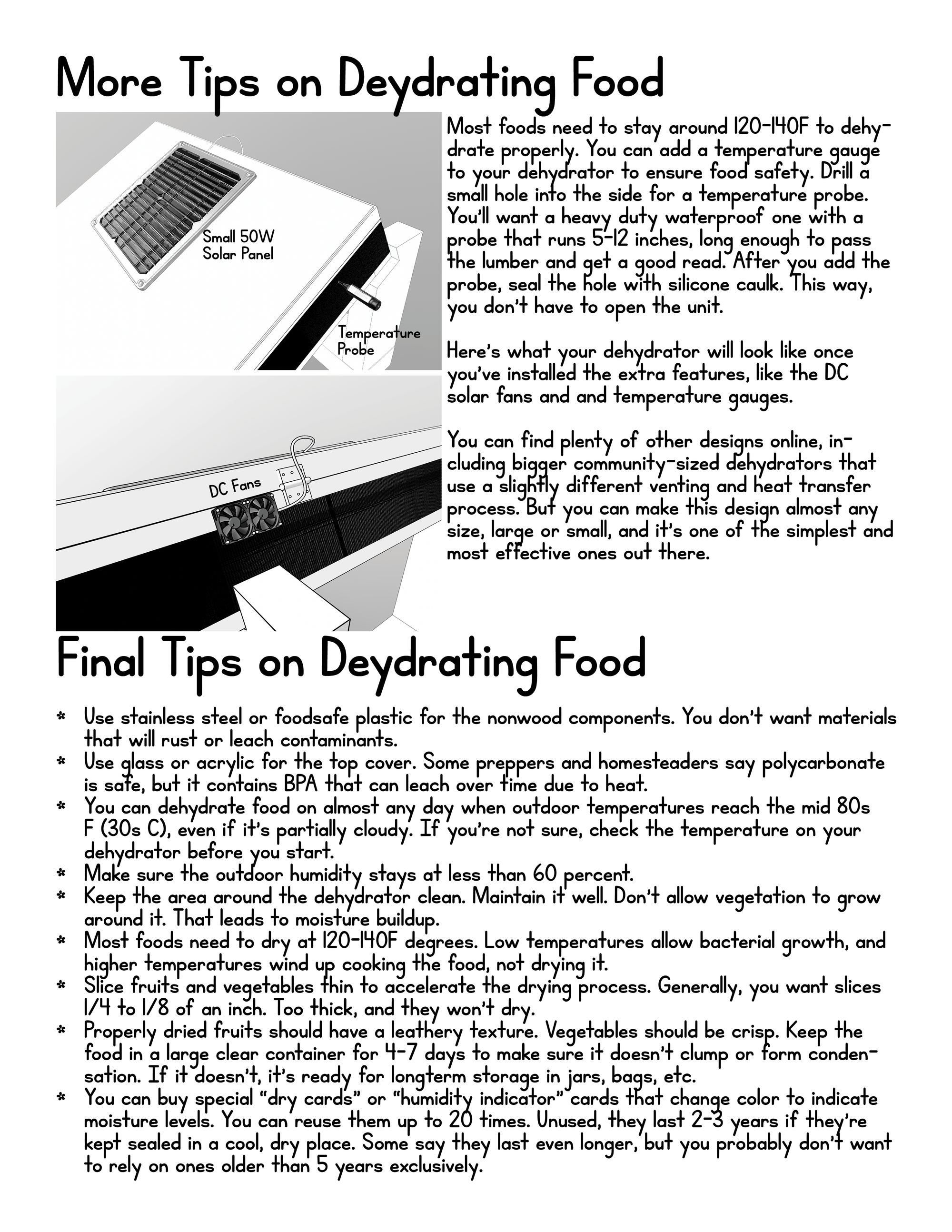
This week, I've focused on solar food dehydrators. If you plan on any kind of homestead, it's essential to have multiple ways to preserve food. It's great if you have a dehydrator oven, but those require electricity. They use a good bit.
Solar dehydrators work without reliable power, and that's a major plus. The tricky part is figuring out how to make your own. I looked at several guides.
Here's the result:
Let me know your thoughts. If you've made a solar dehydrator before, feel free to share what you've learned.
I'm uploading the latest version of the guide. This one looks a lot cleaner. From here, I'll be stepping on the gas a little and adding several pages that are primarily informational, that don't need as much detailed illustration. I'm planning to finish a lot of that work this week. When that's done, it'll free me up to focus more on electrical wiring. A more robust solar panel system with several outlets will enable us to do more work with aquaponics and other items that pretty much require electricity.
We're not far from having a print version of the guide ready.
Survival Illustrated is a reader-supported project. It also receives funding from organizations like the Alfred Kobacker and Elizabeth Trimbach Fund, which focuses on individuals driving meaningful change.
