

The Blackouts Are Coming
One way to prepare

Not many people talked about a report the Department of Energy released last July. It predicts that blackouts will increase 100x by 2030. The current regime is using the report as an excuse to surge investments in fossil fuel projects. Meanwhile, clean energy advocates call the risk "exaggerated."
We know better by now, don't we?
In truth, data center growth alone has already started driving blackouts and brownouts across the U.S. Combined with heatwaves and storms, they pose a significant risk to the grid. In some areas of the country, people are snatching up solar panels as fast as they can. They're terrified of facing a future where the U.S. has not only maxed out its grid, but isolated itself economically with tariffs and trade wars. There's a certain "now or never" vibe in the air, and they're not wrong.
Hey, don't panic yet.
People have been asking me if I plan to dive into bigger systems in the guide. Some of them have very good reasons for wanting a solar and backup system. It's easy to judge rooftop solar owners as fragile little suburbanites who can't go a weekend without their wifi. But some of the people coming to me are talking about medical equipment and fridges that store their medication. So, ya know, it's legit.
Also, imagine living in a place like Arizona, or even Louisiana, and having to endure a grid outage in the summer, after a storm.
That's life-threatening.
So, I've been diving into larger solar power systems again. The deeper I get, the clearer it looks. The average person probably shouldn't be messing with big systems and trying to connect them to their home electrical panels.
It's easy to talk about ditching electricity altogether, but a lot of people can't. If you have a medical condition, or you're taking care of a vulnerable person, or you have pets, or a small child, then you're not exactly in that position.
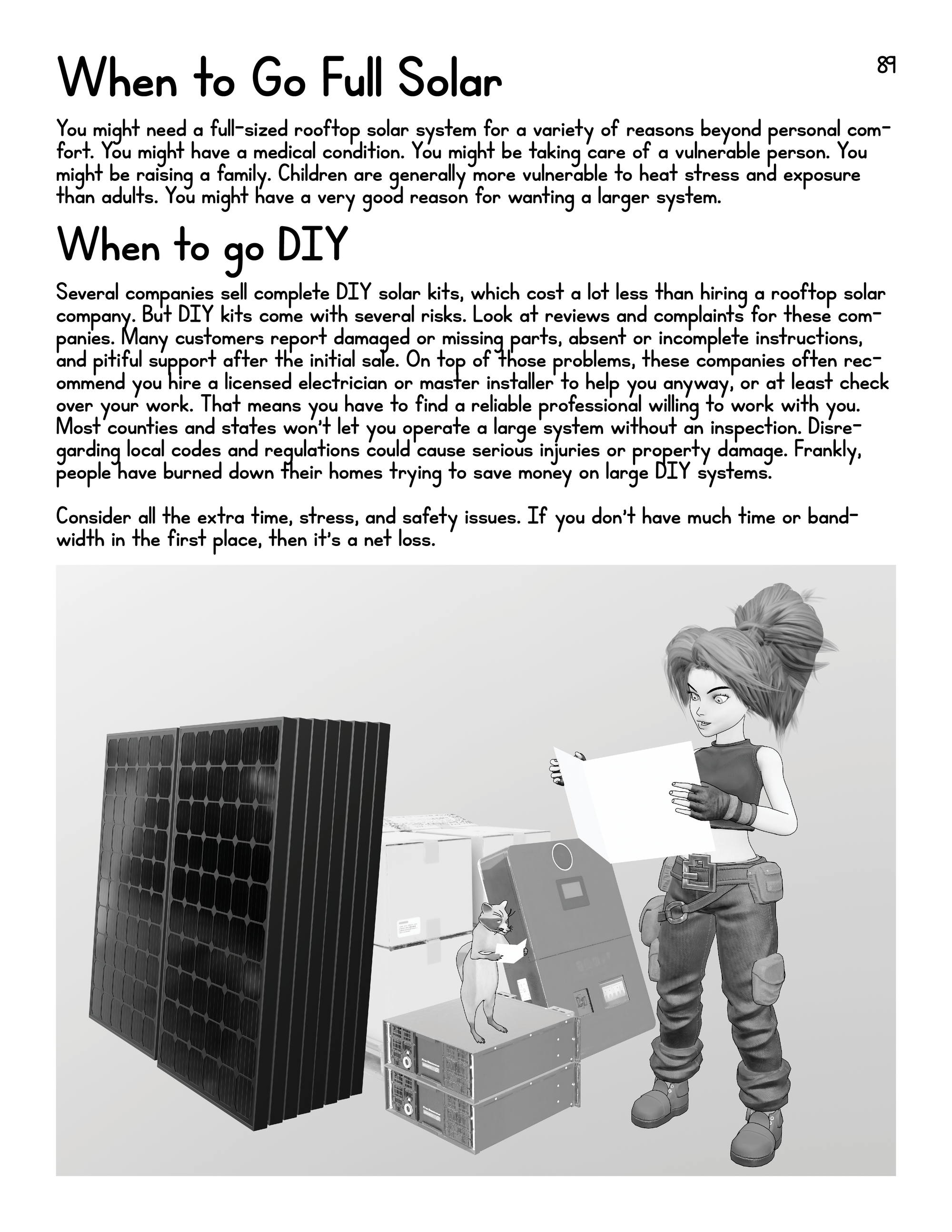
Yes, you can find DIY kits online. Companies promise to give you clear instructions, along with all the parts you need, all appropriately sized and compatible, saving you all the hassle and headache. In reality, customers often tell a different story. They report damaged parts, missing or incomplete instructions, and terrible support.
So, what can you do?
Well, you can become a licensed electrician.
Or...
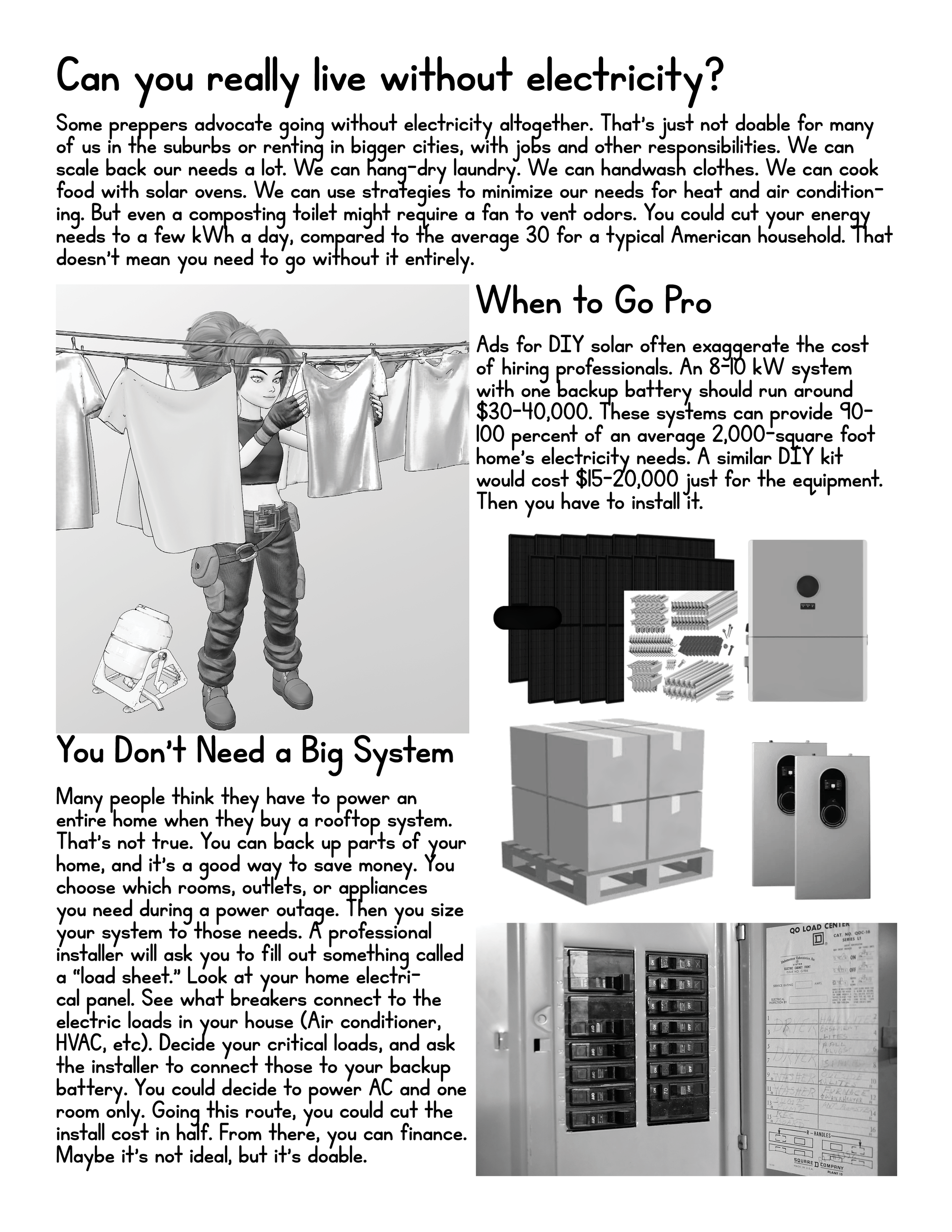
Turns out, you don't have to spend a fortune on a professional installation. You don't have to add solar power to your entire house. You can do it almost à la carte. If and when you speak to a professional installer, tell them you only want to power critical loads. For example, you only want enough panels and a big enough battery to power your air conditioner and HVAC system, or you only need enough to power one room in your house. Maybe you don't need the washer and dryer, or you don't need the dishwasher. Then you don't have to worry about it.
If you study your electrical panel, you can decide exactly what you want placed on a backup battery. It can save you a lot of money.
It's a lot less stress, and it's much safer than DIY for a home.
Another thing:
Practically every prepper channel on the internet wants to sell you panels and batteries through their affiliate links. Don't do it. Talk to a professional solar installer, and let them help you choose the batteries and panels. They know the brands, and they offer warranties. They're going to choose the best equipment because they don't want a bunch of service calls with unhappy customers.
It's great if you have the time and motivation to figure out a full solar install yourself. I've watched DIY videos where experienced folks do it, and it still takes them weeks, even months. They still make mistakes, and they still spend a lot of money. Some of them are getting their panels and batteries for free, in exchange for the publicity.
I'm just trying to be real. It might sound privileged to buy rooftop solar at this point, but it's not such a privilege if you're doing it to protect someone in your family from blackouts driven by the data center bubble. It's not such a privilege if you're financing them. But if we're honest, many of us just won't have the time or bandwidth to do a big job like this properly, without burning down our house or running afoul of local codes. And it's not like the blackouts will wait until 2030. As we've learned by now, almost all of these reports are, if anything, underreporting the actual danger.
I don't know about you, but I don't have a year to become an electrician, given the stakes. And I don't want to risk burning down my house. That's sort of the opposite of prepping. So, don't judge yourself if you decide to just pay to have someone install it. There's a smart way to do it, without spending a fortune.
I've put all of this in the guide.
I'll have another big update on the guide soon. In the meantime, I hope this helps some people make some decisions.
Let me know...
Survival Illustrated is a reader-supported project. It also receives funding from organizations like the Alfred Kobacker and Elizabeth Trimbach Fund, which focuses on individuals driving meaningful change.
