

Stop Packing Like It’s 1999
A quick list for travelers.

Millions of civilians are about to hit the road. They’re boarding planes. They’re packing buses. It’s all happening just a few days after one of the worst series of grid failures in recent history. Think everyone might be on edge?
How many of them will wind up trying to sleep in an airport chair?
How many will pass out during traffic jams? How many fights will break out because someone got hangry?
And yet, we all keep packing like it’s 1999.
That needs to change.
How?
One bottle of water can save your life
Take a collapsible water bottle or two with you. For example, look at the Vapur Eclipse, the Nomader, the Hydaway. They hold up to 34 ounces. When you’re not using them, they roll up nice and tidy. Once you’re past security, fill it up at a water fountain. Now you’re hydrated.
If you can’t find a collapsible bottle now, any bottle will do.
In a true emergency, just 34 ounces of water extends your survival window up to 4-7 days. That’s a lot better than zero.
Don’t drink it all at once.
Sip it.
Stop packing snacks
Snacks aren’t going to help you during a real travel emergency. Pack meal ration bars. Companies like SOS make food rations that are specifically designed for disasters. They’re solid. They’ll pass security. Also check out Datrex, Grizzly Gear, Mayday, and Mainstay. They’re all approved by the Coast Guard. One brick contains nine individually wrapped bars at 400 calories.
Protein bars and trail mixes dehydrate you.
These don’t.
Pack a medical pouch
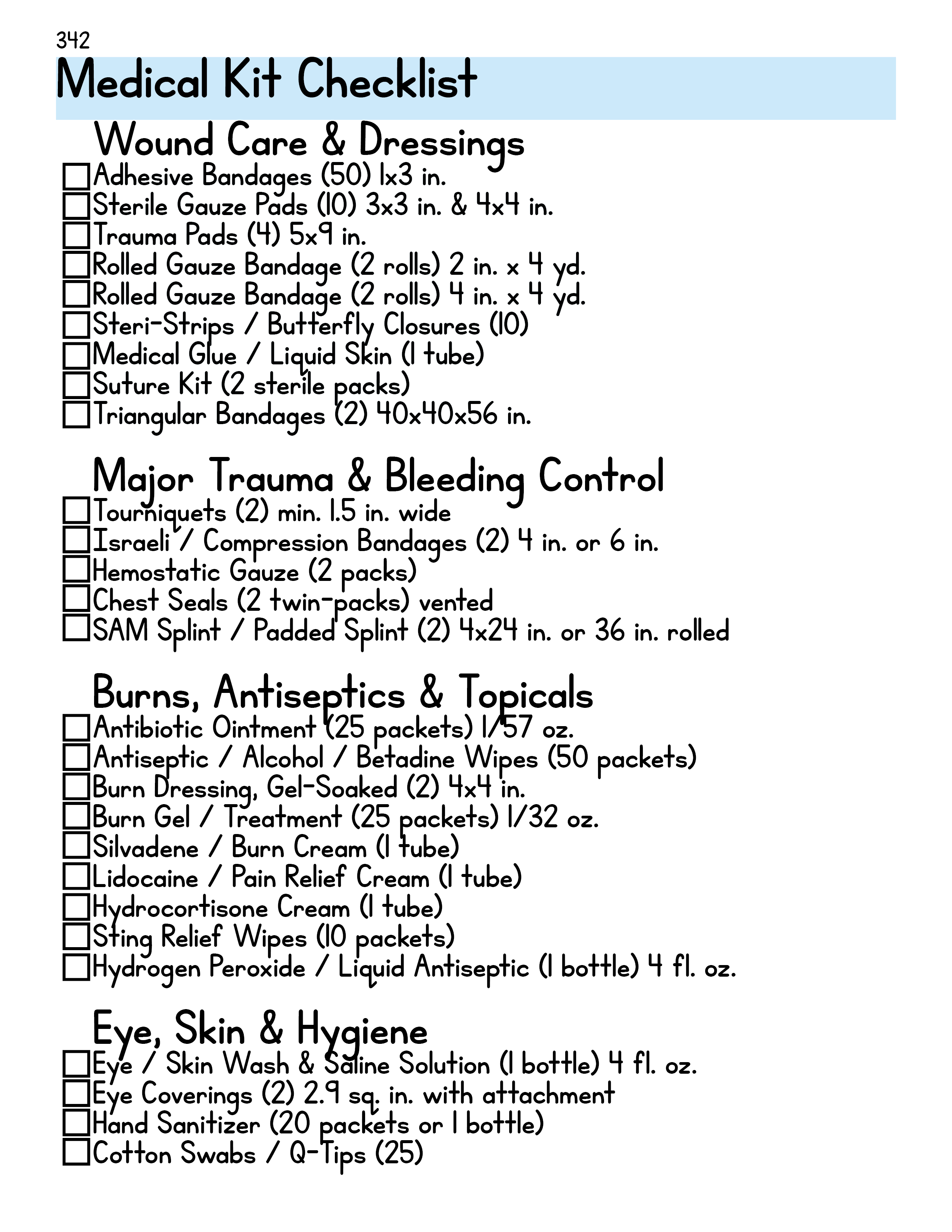
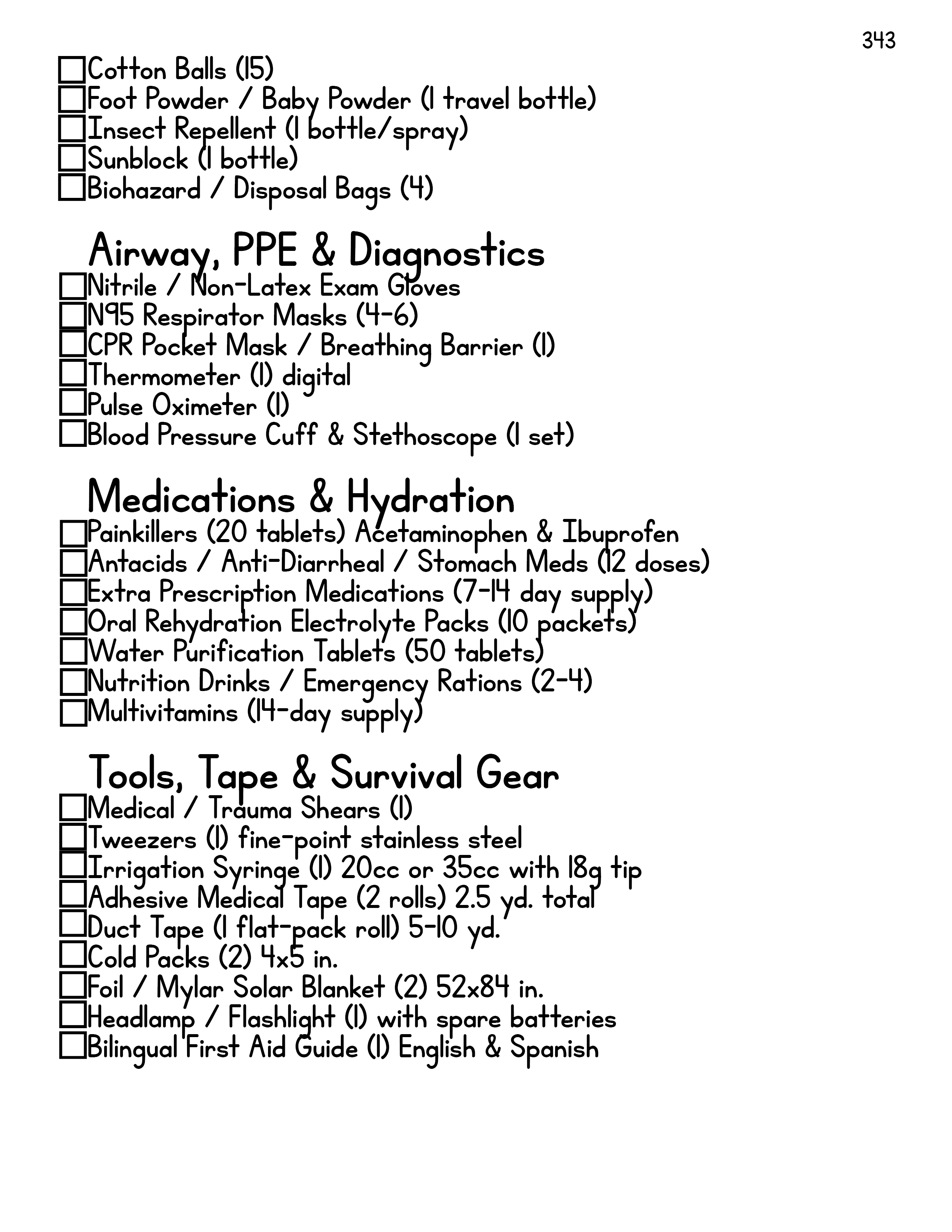
You can pack a TSA-compliant medical pouch. Your medical kit can even contain trauma shears as long as they’re less than four inches. (Double-check to be sure.) I’ve made a full list of what to pack in this free guide. It’s based on guidance from the American National Standards Institute (ANSI) and the International Safety Equipment Association (ISEA). It’s comprehensive.
You can’t pack all of that onto a plane, but you can go through the list and choose what’s most important to you and your traveling partners. Keep the tubes under 3.4 oz (100ml) or substitute them with packets.
Some companies even sell premade TSA-compliant kits. Look at Adventure Medical Kits, Keep Going GoKit, MFASCO, etc.
Remember prescriptions.
In case you get stuck in the airport
You can pack a pocket blanket or compact travel blanket. They pack down to a few inches. Also consider ear plugs, a sleeping mask, etc. They’re nice to have. You can pack them in your personal item, or your carry-on, or just anywhere you can get to it. Also think about an inflatable pillow.
Or if you’re okay roughing it, save the space.
It’s your call.
Backup power and light
You’ll probably want to keep your phone charged. So pack a portable power bank. Look at options from Anker, Nitecore, and Zendure. Keep it in your carry-on or your personal item. Keep it at 100Wh (27,000 mAh) per TSA guidelines.
It’ll keep your phone charged for 3-5 days.
Also pack a rechargeable flashlight.
Or a keychain light.
TSA compliance
You’d be surprised at what you’re allowed to pack. Some companies make TSA-compliant multi-tools. You’re even allowed to pack a full-face respirator or CBRN gas mask, including ones from companies like 3M and MIRA Safety. The TSA folks might think you’re a little weird, but that’s not your problem. Once they see your emergency medical pouch and other stuff, it will click.
Just be up front about it.
Cash and documents
Bring cash, divided into usable bills like tens and twenties. Bring backup documents or copies of your driver’s license and passport. Color copies are ideal. Keep them in a pouch or wallet with RFID-blocking material.
It blocks electromagnetic signals. Remember that you can’t bring $10,000 or more in cash with you on an international flight. But if you’re flying domestic, then briefcases full of cash are apparently completely cool.
So I’ve read…
If you’re driving
The good thing about driving is nobody will care if you want to pack an entire bottle of shampoo. It’s completely up to you. This means you can pack more emergency gear. The only constraint becomes space.
A standard car emergency kit includes:
- A LiFePO4 portable jump starter
- Maps & alternate routes
- A window breaker/seatbelt cutter
- LED road flares and reflective vest
- An LED head lamp/other flashlights
- Ice scraper and wool blanket
- Electrolyte pouches/Extra water
- A foldable snow shovel
- A can of flat tire sealer
- A tire kit/donut
- A full spare?
Every trip is a bugout waiting to happen
If you’re already a prepper, you probably know the INCH bag. It stands for “I’m never coming home.” That’s the mindset of the full bugout bag.
But that’s not you.
You’re not packing a full bugout bag. You’re just packing for something to go wrong. Let’s face it, today that’s more likely to happen. The chances of hitting snags between your home and your destination are going up every year, on account of wars, cyber attacks, and climate disasters. It makes sense to start packing for the world you’re actually traveling in, and not the world you remember.
Rethinking the bugout bag
The term “bugout bag” emerged from first-generation preppers and Bourne movies. That’s not you. You’re not on the run from the government. You’re not heading to some secret cabin in the woods. You’re not planning to spend weeks in the wilderness drinking squirrel urine. (That’s a bad idea, btw.)
That doesn’t mean you should just leave for your trip with no emergency supplies or plan whatsoever, just because it’s not something you had to do forever ago. That leaves you vulnerable to all the bad things that can happen on your way to grandma’s or your in-laws. It doesn’t have to be the end of the world. It could just be a system outage. It could be a snowstorm that grounds all the flights on your way home. It could be a flat tire. It could be a really bad traffic jam. Don’t let your desire for normal times trick you into packing like it’s 1999.
Be prepared.
Be smart.
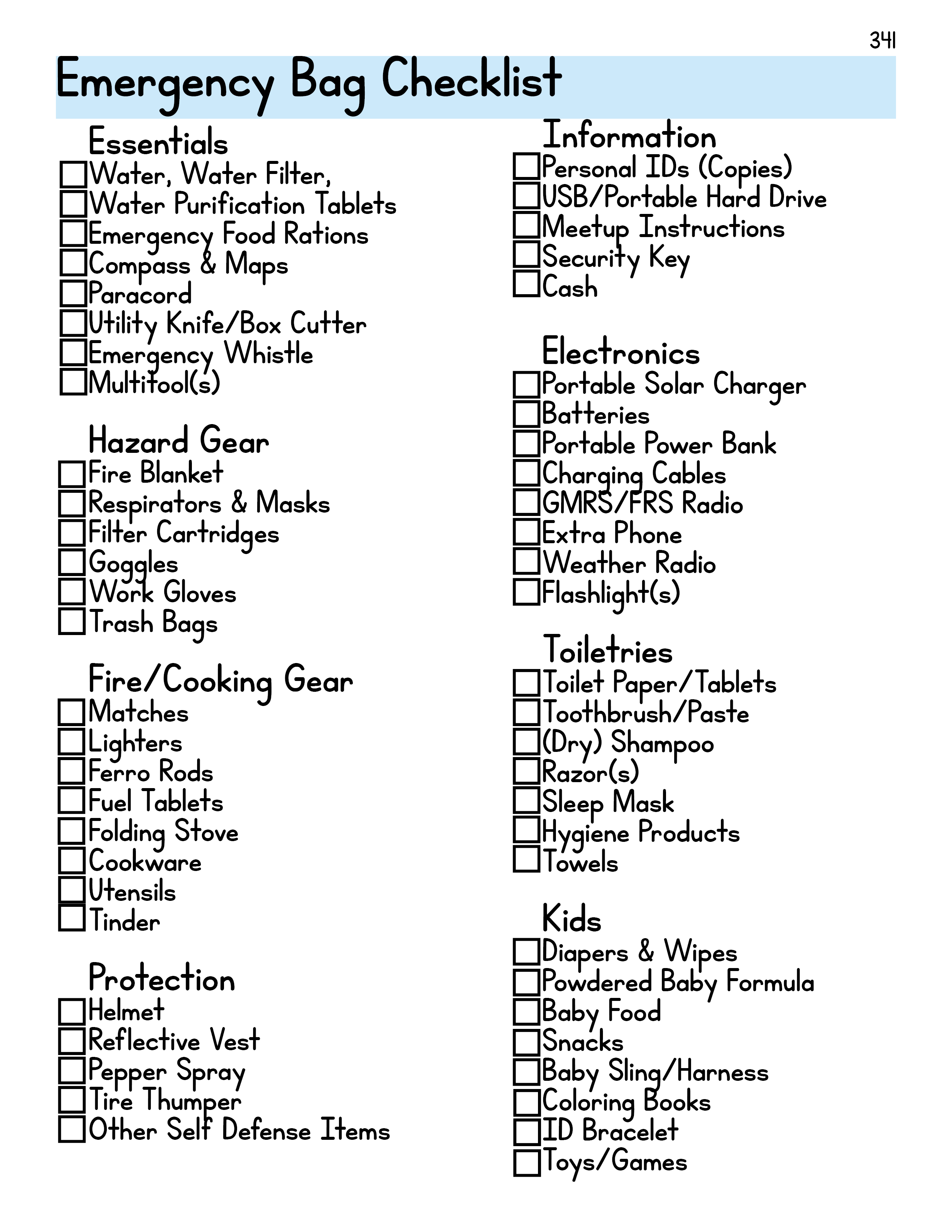
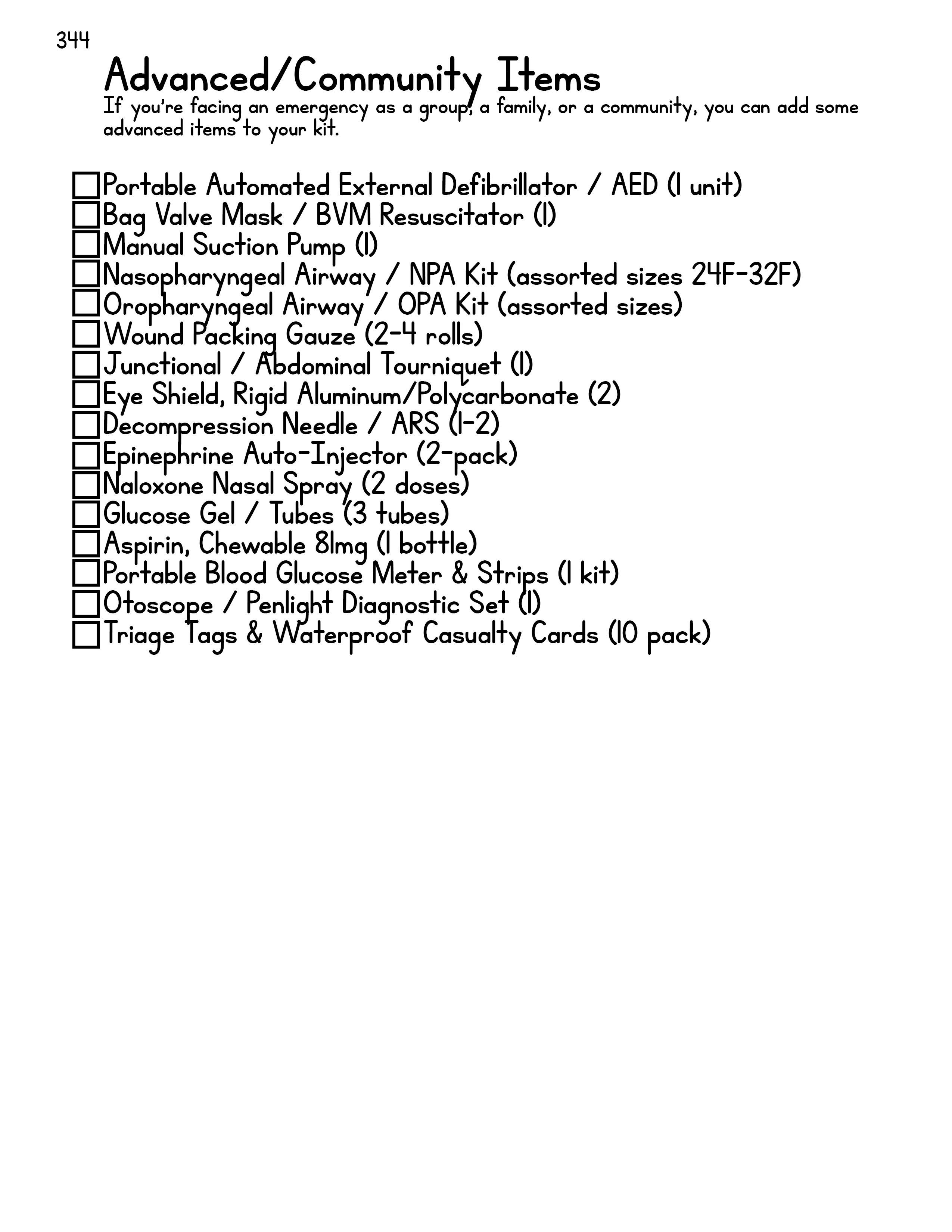
I’ve made you a checklist
Even if you’ve already left for your trip, you can save these for next time. You can adapt them however you want.
They’re yours:
If you’re interested:
I’ve just finished an illustrated survival guide that’s 350 pages. I’m also designing a bugout bag that’s not a bugout bag.
Support either one.
