

Survival Illustrated: Updates & Future Plans
You'll like this...

Let's start with some good news.
For months, we've been working on ways to harvest water during emergencies. Water matters more than anything. You can't last more than a few days without it, and you certainly can't grow food.
This project has gone through several phases.
In the first stage, we debunked dew harvesting as a viable way to survive. We tried Warka towers. They don't work in most areas. Next, we tried a passive dew harvesting system with several different kinds of plastic. They worked, but scaling them up would mean covering half a yard in panels with a metal framework to protect them from the wind. We're talking anywhere from 500-800 square feet (50-75 square meters) of panels just to collect a couple of gallons. It would cost at least a thousand bucks. The solution just doesn't scale.
But something did finally work.
This:
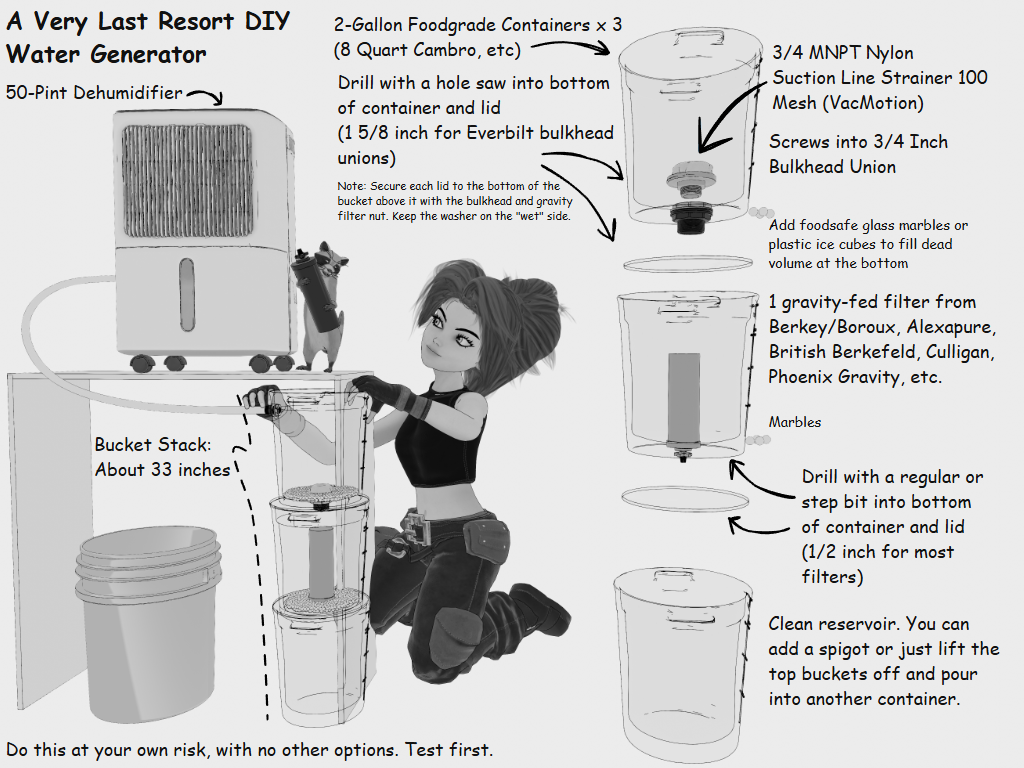
We spent weeks on a DIY water generator. If you know, water generators have become popular over the last few years. Several companies sell them now. The problem? They cost $2,000 or more. They often come with proprietary parts, meaning they're hard to replace. The filter kits also cost a lot. It's the safest route, but it's also expensive and exclusive.
Meanwhile, you can find dozens of videos on YouTube that show you how to make a water generator with a dehumidifier. They use the same basic technology. Of course, they're not designed to produce potable water.
So you have to get creative.
Filtering dehumidifier water poses a major challenge. It takes a long time to produce enough to fill a gravity-fed water system like Alexapure or Boroux. These gravity-fed purifiers need "head pressure" to operate well, meaning it's best to submerge them. You need at least 2-3 gallons to do that. A lot of YouTube videos recommend large containers for DIY water generators. In the real world, that means running a dehumidifier for hours on end. That translates into a lot of electricity. Dehumidifiers produce grey water. Even companies like Alexapure and Boroux don't recommend drinking it. The water can clog or degrade expensive carbon block filters. It's just not very practical.
We found a better way.
First: We got a brand new 50-pint GE dehumidifier for about $300. On paper, that means it produces 50 pints over 24 hours of operation. That's roughly six gallons (23 liters). On a good night, with the window open, and 50-60 percent humidity, it can produce about 2-3 gallons of water over 12 hours. On average, you can expect one gallon every six hours. That will help keep a small family alive. So, we had to find an effective way to filter one gallon of water with a gravity system without overwhelming the carbon filters.
We shrank the containers.
We bought a bunch of different-sized containers and experimented with them, using the setup in our diagram. We made a triple stack. The top container holds a suction line filter with 100 mesh. That filters out a lot of sediment and gunk that would otherwise clog a carbon block filter. The middle container holds the carbon block filter that strips out heavy metals, VOCs, and microbes. The bottom container holds your clean water.
First, we moved down to 2-gallon Cambro containers. Then we finally settled on Rubbermaid 1.1 gallon "Flex & Seal" containers. They have just enough room to hold the suction line filter and the carbon blocks. They're small enough that you can fill them up to generate the necessary head pressure. So even if you only have one gallon of water, it works.
The real question: Is the water safe?
Nobody will ever tell you it's "safe" to drink water from a dehumidifier, but we're talking about an emergency situation with no access to water at all. If you have any way to run a dehumidifier, like an emergency solar array, then it gives you a lifeline. With that in mind, we sent our dehumidifier water to Tap Score to analyze for heavy metals and other contaminants. It's pretty clean. There was no detectable lead or other heavy metals, other than a trace amount of manganese. "No evaluation possible" means that nothing was detected for that analyte. They found fluoride in our sample, which is baffling, but we did wash the containers. They might've held on to the fluoride.
For this test, we used one Alexapure filter. Our choice ultimately came down to Alexapure and Berkey/Boroux. They're the only two brands that have ever claimed their filters can remove viruses and bacteria.
Here are the results:
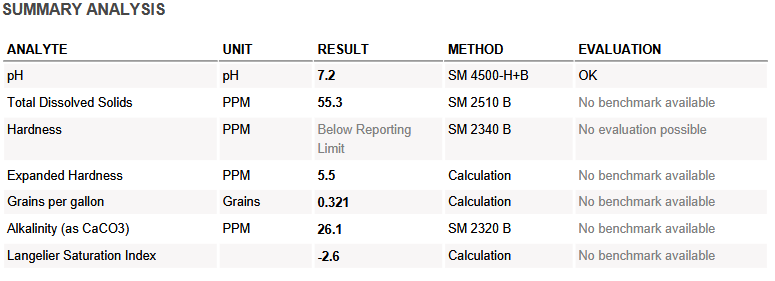
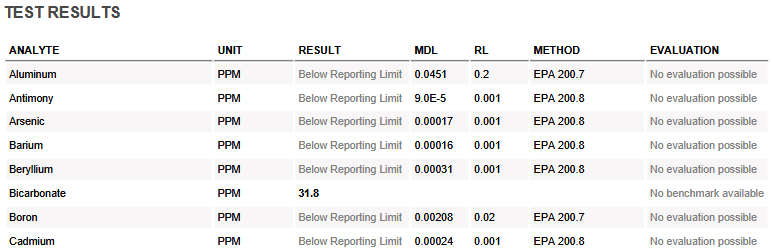

So, here's the verdict:
We're confident that we can use this DIY setup as a last resort. That said, the quality of your water will depend on the quality of the air. Your air can absorb VOCs and other toxins and those can wind up in your dehumidifier water, even if the unit itself isn't leaching metals.
If you're going to do this: Buy a dedicated dehumidifier that you only use for water emergencies. Keep it clean. Run an air purifier next to it to help with the air quality. If you can, try to run the dehumidifier in the evening with an open window to take advantage of maximum humidity. Understand that you're taking on a risk, but it's less of a risk than dying of thirst.
Now for the even better news:
We've finished our rain barrel setup. We made a filter train that cleans the water down to .1 microns. We sent the water off to a lab for testing. We've also used Varify for home testing and the results look good. We're perfecting the setup, finding ways to store the filters safely between uses, and also finding ways to knock down the cost, and we'll have more updates on that soon.
Earlier this summer, we developed a cheap composting toilet that you can set up and take down as needed, without spending thousands of dollars. Now we're working on a way to hot compost your toilet material in the safest way, even out in the suburbs with neighbors who won't tolerate open piles of poop in your yard. We've found sanitary, sealable containers for the job.
More updates on that soon...
We're going to update the survival guide with all of this information in the fall. We're also going to launch a page on this site that lists out all the detailed parts and vendors we're using for supplies. Finding this stuff has been half the challenge. So, it'll make your job easier. We're also going to make playlists of YouTube videos with vetted content. That way, you won't have to sift through a dozen viral "dew harvesting" clickbait traps to find information.
All of this takes an immense amount of time and work. We're trying to design affordable setups. We get there by trial and error. Supplies and tests cost a lot. So if you can throw us some support, that would be nice. We have a couple of very generous backers, but we need a large base to keep this work going.
It's easy to churn out content that simply feeds the hamster wheels of outrage and despair. We're trying to rise above that and produce practical, grounded takes that can actually help everyone get through this era. I'm not going to lie to you and make promises about taking on billionaire fascists that I can't keep. I'm not offering moonshot crusades. I'm not predicting famines that might or might not happen in the next 60 days. I'm testing our specific, concrete ideas that could actually save someone during a crisis.
We all talk about building communities, units of survival, and enclaves of resilience. I'm trying to make the blueprint for that. If you find this content valuable, please help sustain it. If you've been doing that, then... thank you. I hope we can keep earning your support.
Thank you,
Jessica
Sentinel Intelligence is a reader-supported publication that also receives funding from organizations like the Alfred Kobacker and Elizabeth Trimbach Fund. You can offer one-time support here. To receive new posts and support this work on a more regular basis, consider becoming a free or paid subscriber.
