

7 Things You Should Never Do to Survive That Only Work in The Movies
What you should do instead.

A third of Americans honestly believe they’ll be the last one standing after an apocalyptic event. They also believe you can get water from a cactus. During heatwaves, Google registers an actual spike in queries.
Well, can you?
In 1948, John Wayne was supposed to cut open a cactus and drink the water inside. A park ranger told the director, John Ford, that you can’t actually do that. It doesn’t work. Everyone ignored him. The crew made a fake cactus and soaked it in water. And so John Wayne cut open a fake cactus and squeezed the water into his canteen. Thus was born one of the biggest survival myths of all time. Hundreds of other movies, shows, and cartoons copied the move.
There’s only one type of cactus you can cut open for water, the fishhook barrel cactus. You have to cut off the top, smash it to a pulp, and then wring out a tiny amount of water that tastes absolutely horrible.
It’s often not even safe.
Sometimes, survival isn’t just about knowing what to do. It’s also about cleaning all the myths out of your head.
What else?
Don’t try to cauterize a wound
So here’s a funny story…
In 1536, a surgeon named Ambroise Paré ran out of the raw material he was using to cauterize the wounds of soldiers during the Siege of Turin. He blended up a makeshift medication with egg yolks, oil of roses, and turpentine. He applied it to their wounds. He thought for sure they were goners.
The next morning, the ones who’d gotten the conventional cauterizing treatment were all dying in agony. The ones who got the ointment were doing just fine. That’s when cauterizing started to go out of fashion. Paré changed the history of military medicine, by accidentally figuring out what not to do.
Cauterizing a wound has remained a “quick fix” in Hollywood. For thousands of years, battle surgeons really did try to cauterize wounds. They thought it worked because it sorta stopped the bleeding by sealing the blood vessels for a day or two. It seemed to work in the short term. In the long term, mortality from infections claimed anywhere from 50-80 percent of cauterized patients. Cauterizing creates layers of dead tissue and third-degree burns that feed bacteria. On top of that, a cauterized wound can actually rupture and start bleeding all over again.
You know what actually works?
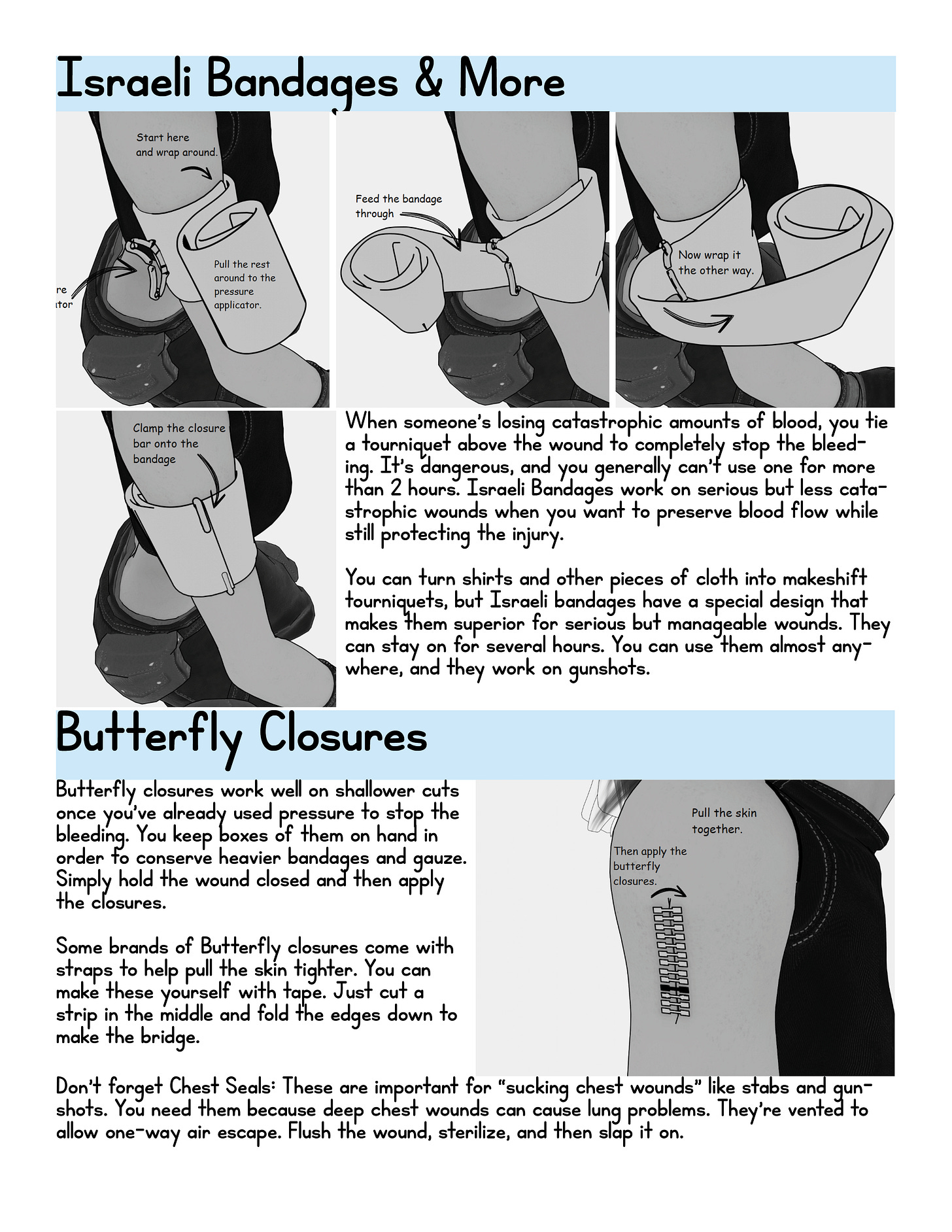
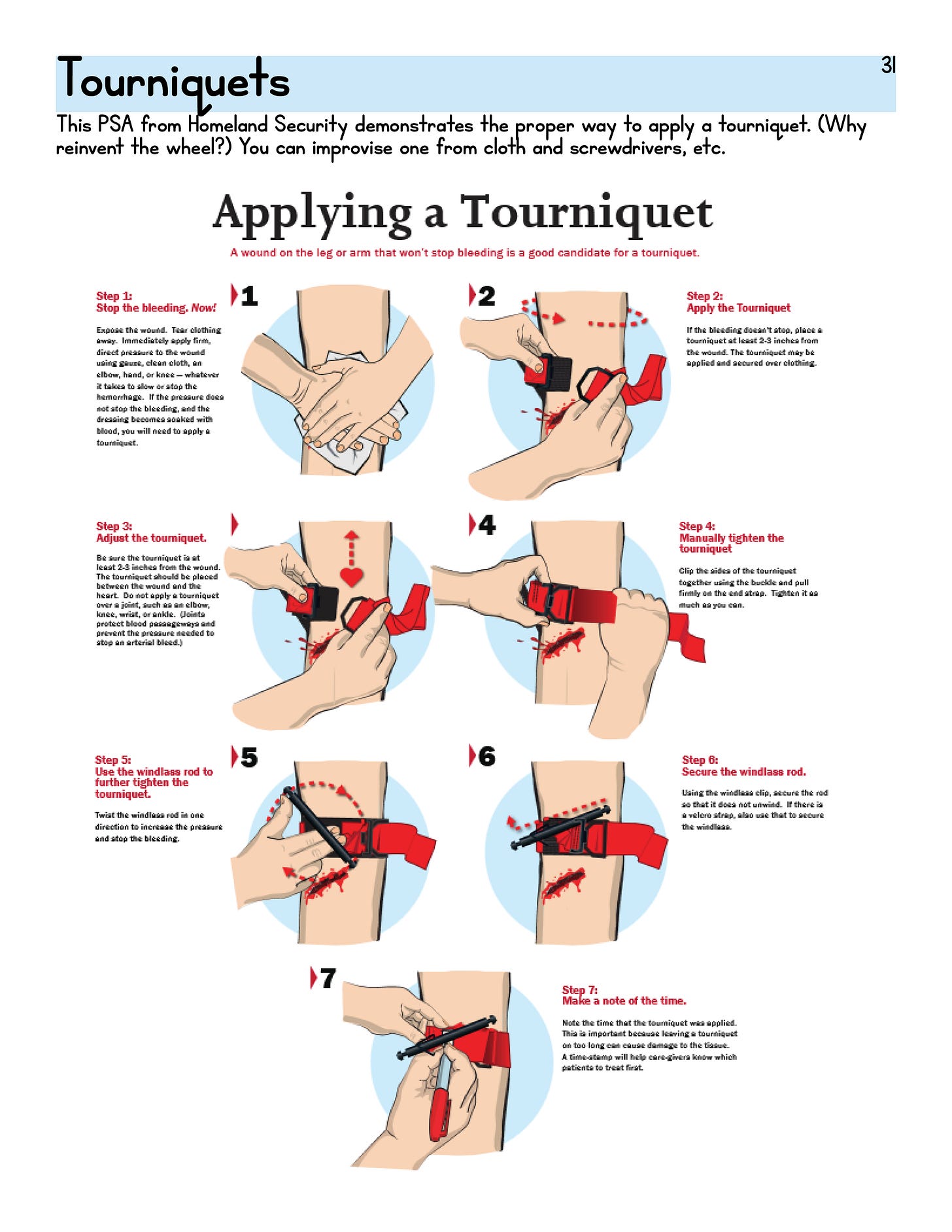
A tourniquet.
Don’t drink your own urine
It doesn’t help at all. It makes everything worse. Your urine contains salt, minerals, and other toxins your body has expelled, sometimes in concentrated amounts. You’re just putting it back in, and your kidneys suffer as a result.
But, you ask, how did this even become a thing?
Apparently, dramatic survival stories from WWII pilots saturated Western media. The pilots often reported drinking their own urine to survive. The military investigated their claims and found out they would’ve been better off not drinking at all. They were just incredibly lucky. They’d hydrated before crashing or getting stranded in the middle of nowhere. That’s what saved them.
That’s why they survived.
Newspapers didn’t engage in much follow-up, and the stories stuck in cultural memory and imagination. They got passed down over generations, resurfacing in the occasional tale of survival. Every single time, in reality, drinking urine either didn’t help or made things worse. On a related note, don’t try to filter your own urine either. You’ll destroy your filter in a matter of days, if not sooner. You’re better off trying to filter almost anything else.
So what actually saves you?
Hydrating.
Don’t open windows during a tornado
It’s a common myth in Tornado Alley.
Don’t do it.
If a tornado comes close enough to cause a massive pressure differential, it’s close enough to rip off your roof. Once the roof goes, the rest of a standard house simply collapses on itself. In fact, opening a window lets violent winds inside that accelerate the collapse. Don’t mess with the windows.
Now, research has shown that wearing a simple motorcycle helmet can dramatically up your odds of surviving a violent storm. During tornadoes, most injuries happen to the head and neck, and that’s what kills people.
Get somewhere safe.
Wear a helmet.
Don’t try to set a bone yourself
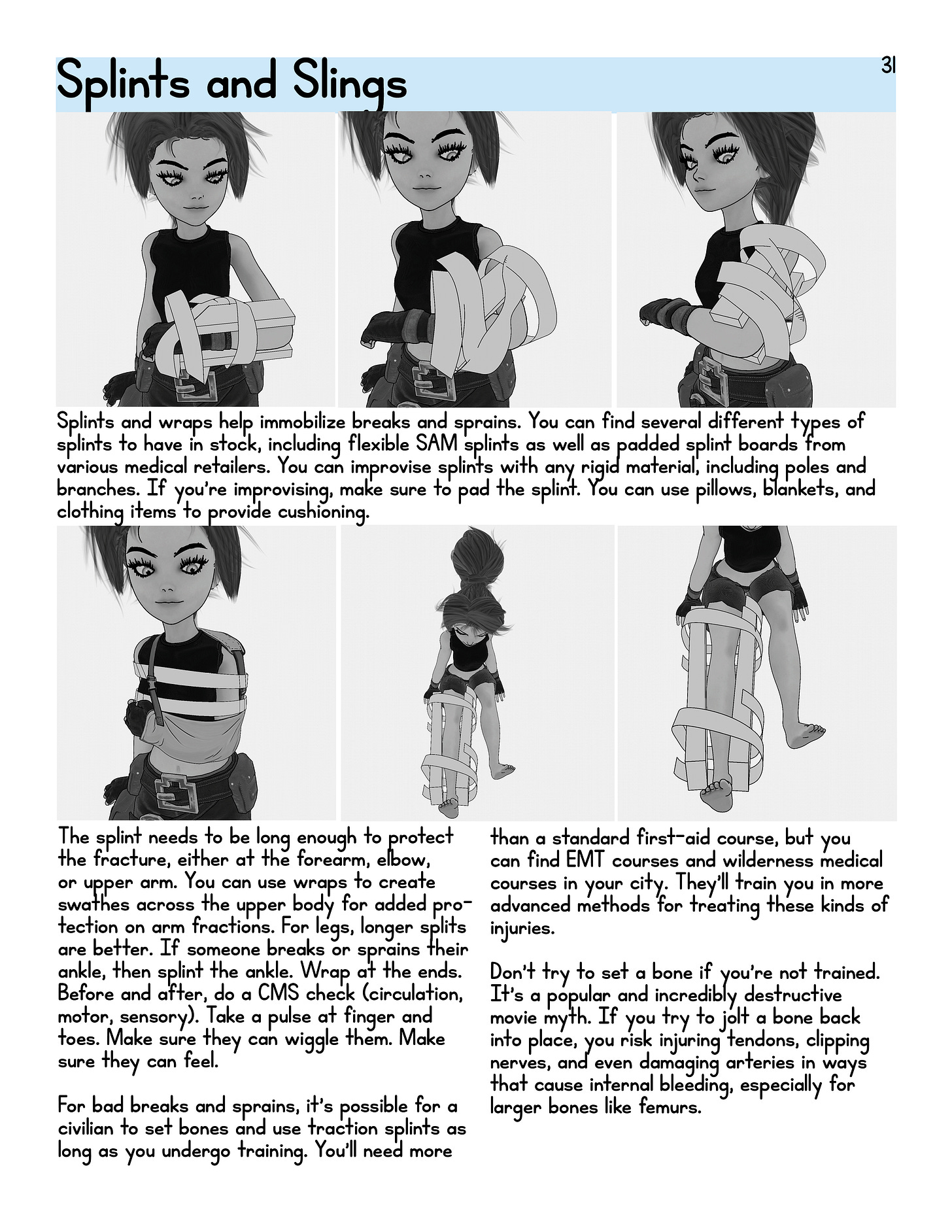
You know all those movies and TV shows where one character jolts someone’s bone back into place? Yeah, don’t do that. You could damage nerve tissue and even cut arteries that way. What should you do instead?
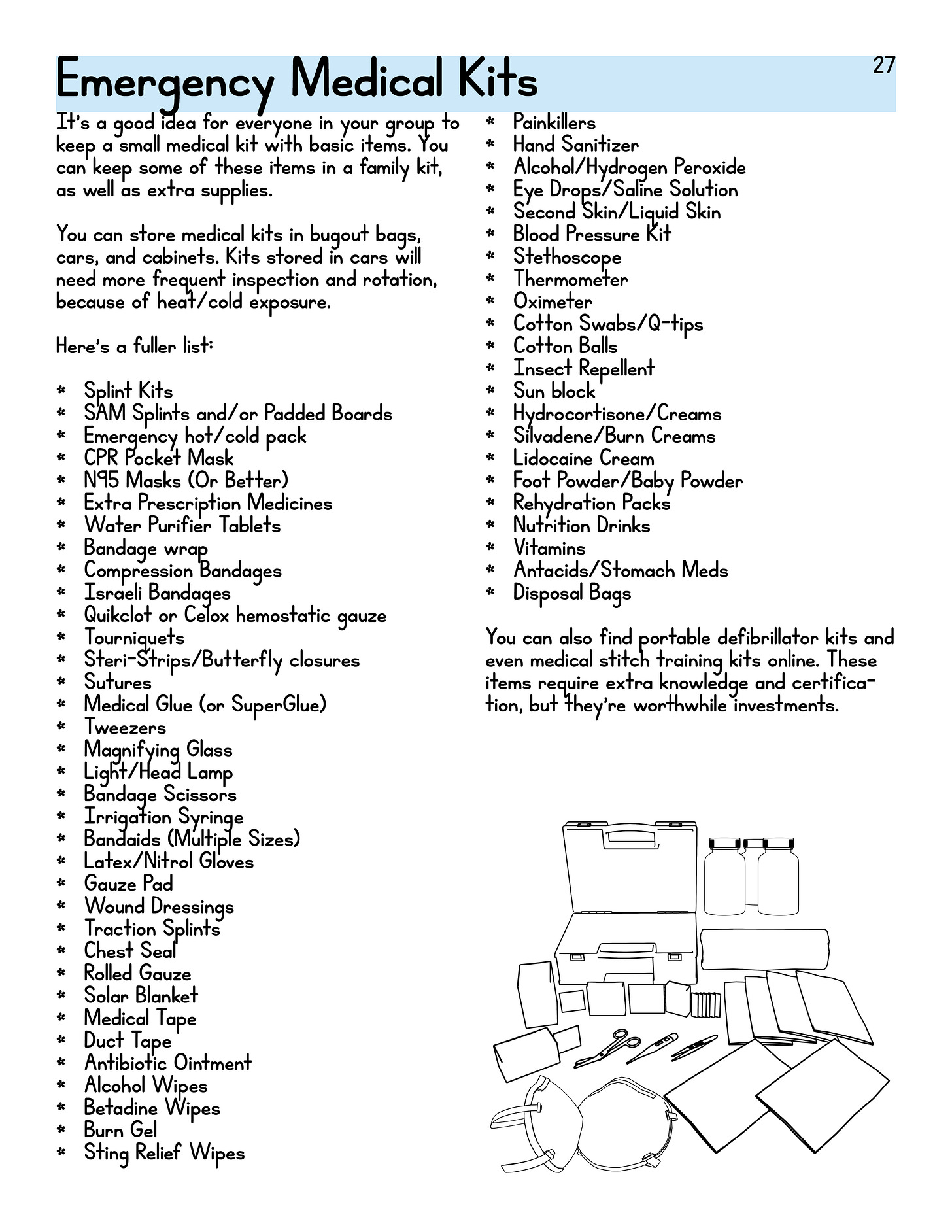
Splint the injury as you found it. That’s why a splint kit makes an excellent addition to any emergency bag. Keep it immobilized. If you can rig a stretcher (or you have a stretcher kit) then get them to an ER as soon as possible.
If you envision setting bones and using traction splints as a likely skill you’ll need, it’s time to start taking some real courses in emergency and wilderness medicine. This goes beyond a first-aid class.
What else?
Don’t suck poison or venom out of a wound
So you survived an apocalyptic earthquake, and your best friend just got bit by a rattlesnake? Wow, you’re having a rough day…
Don’t suck out the poison.
This doesn’t work on spider bites, snake bites, or scorpion stings. It doesn’t work on anything. It’s pure cinema. In fact, trying will often accelerate tissue damage and make the situation overall far worse.
No, you can’t stockpile antivenom.
It’s insanely expensive, and it’s insanely unstable. It usually has to be administered through an IV drip. There’s no such thing as a simple, injectable antivenom pen. If there were, big pharma would know.
Some preppers stock antivenom made for pets, but it carries a relatively high risk of anaphylactic shock.
So…
Don’t try to harvest dew
For years now, the internet has been overflowing with videos promising that you can learn how to harvest dew with a few simple materials. Unfortunately, I fell for these myths and spent a year trying to build a dew harvester in my back yard. As it turns out, experiments with “air wells” in the early 20th century were all based on a fundamental misunderstanding of ancient archeological sites. A Russian engineer mistook a burial mound for a giant dew harvester…
Anytime a video talks about “ancient secrets” of harvesting dew in the desert, they’re talking about coastal cities that took advantage of very specific geographic glitches. You can’t replicate the effect in most places.
At best, with a giant dew harvesting rig, you can harvest about half a liter over the course of an entire night. It doesn’t scale.
I tried.
Don’t stockpile meds (except when…)
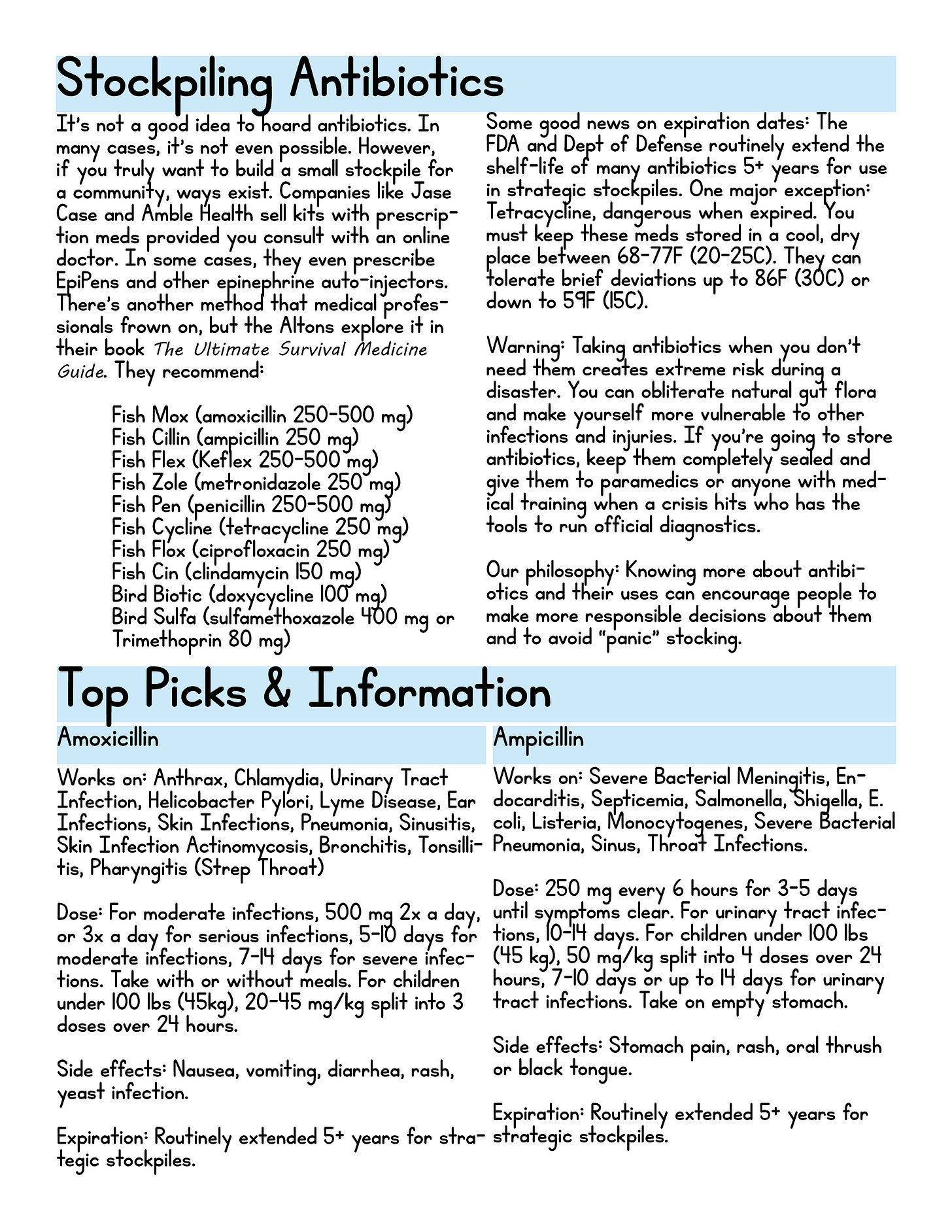
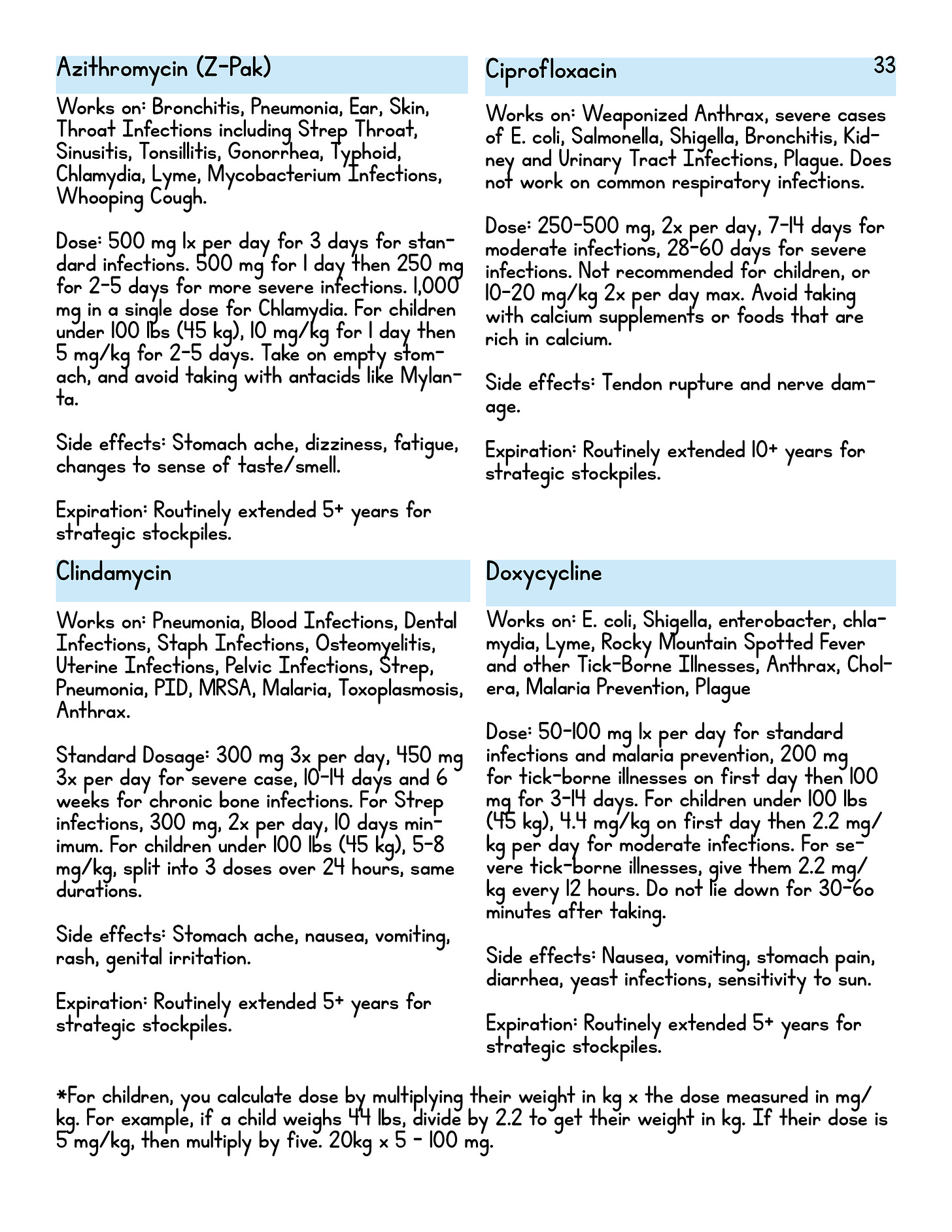
You can order antibiotics through companies like Jase Medical and Amble. They’ll sell you just about every major med under the sun. In case you didn’t know, many of these meds even last for years beyond their official expiration dates. That’s why the FDA and the DOJ often maintain strategic stockpiles of them. Amble includes many of these in something they call a “panic pack.”
Skip the panic pack for now.
Here’s why:
A case full of prescription meds doesn’t do anyone much good unless you actually know how to use it. Your odds of successfully diagnosing a bacterial infection during a long-term disaster are effectively zero. Even doctors and paramedics get it wrong 30 percent of the time, especially during a crisis.
Taking an antibiotic when you really need an antiviral isn’t just swinging your bat at the air. It can actually hurt you.
During a disaster, dehydration scores the biggest kills. Antibiotics often carry side effects like stomach aches and mild diarrhea. They kill off your body’s natural microbiome and leave you open to all kinds of other infections, including nasty ones like C. difficile. They amplify dehydration. By the time you get to an ER, the staff won’t know what symptoms are caused by your core illness and which ones are brought on by misuse of meds. You’ve made their job harder.
Some very sophisticated preppers out there know how to use pin-prick blood tests to measure for C-Reactive Protein (CRP) and Procalcitonin. Elevated amounts often signal a bacterial infection. They also keep throat swabs and urine test strips that show other signs, like leukocytes and nitrites. Some of them even know how to run Gram stains under a microscope. Is that you?
Then enjoy your meds.
Otherwise…
What if we just did what works?
It’s almost funny that so many Americans think they’ll survive an apocalypse by cutting open a cactus in the desert, cauterizing a wound, setting a bone by knocking it back into place, harvesting dew in their yards, or stockpiling meds when they don’t even know how to diagnose an illness. On that note, many Americans also report not knowing how to apply a tourniquet or other basic medical procedures. And yet, we all think we’re going to stick a sword into a fire and cauterize our wounds when the poop hits the fan. You can’t make this stuff up.
Instead, I’m trying to focus on skills and tools that actually work. I spent a bunch of time researching antibiotics, thinking it might help. The knowledge helped me decide not to order a “panic pack,” at least not for a while. Still, I think it’s important to know everything. That’s what enables smart decisions.
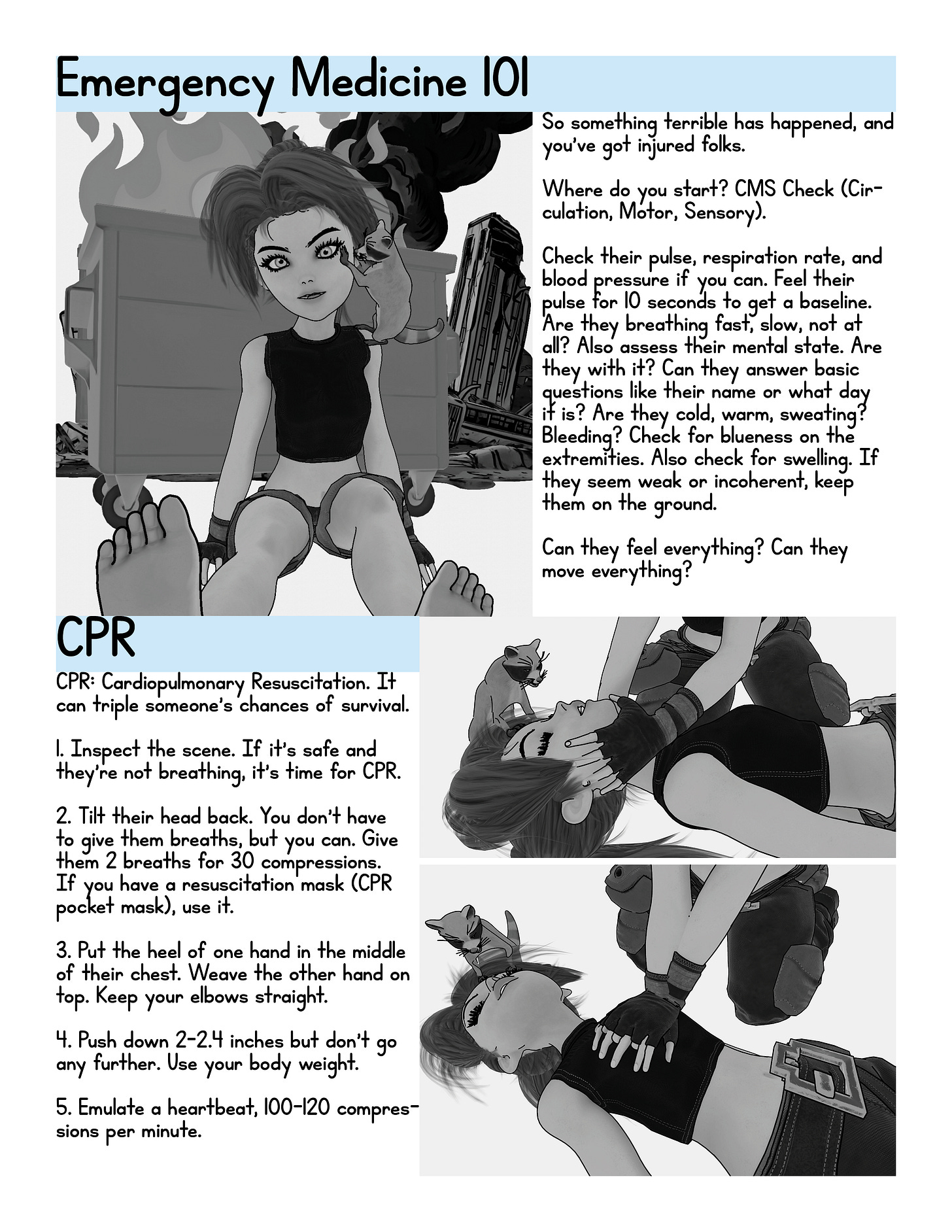
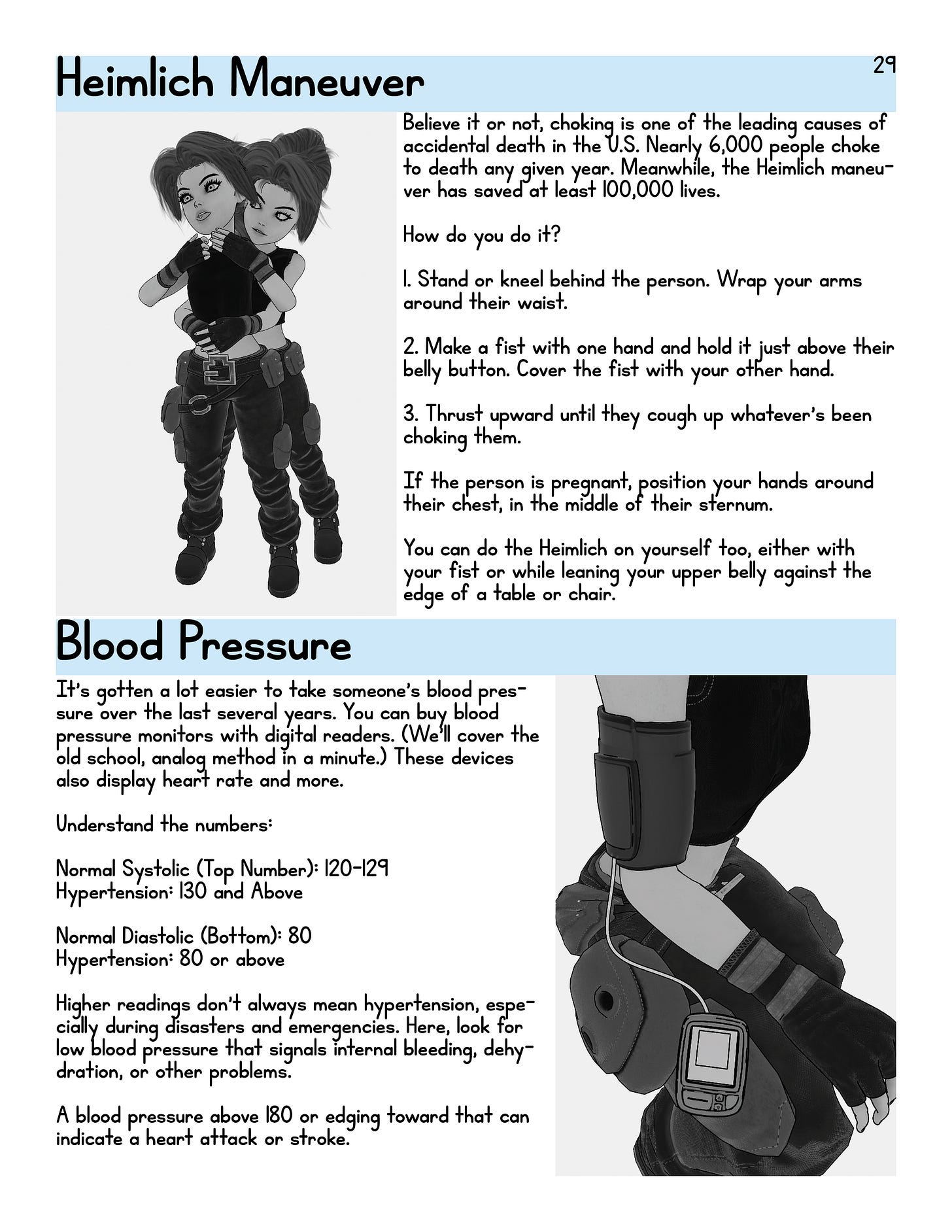
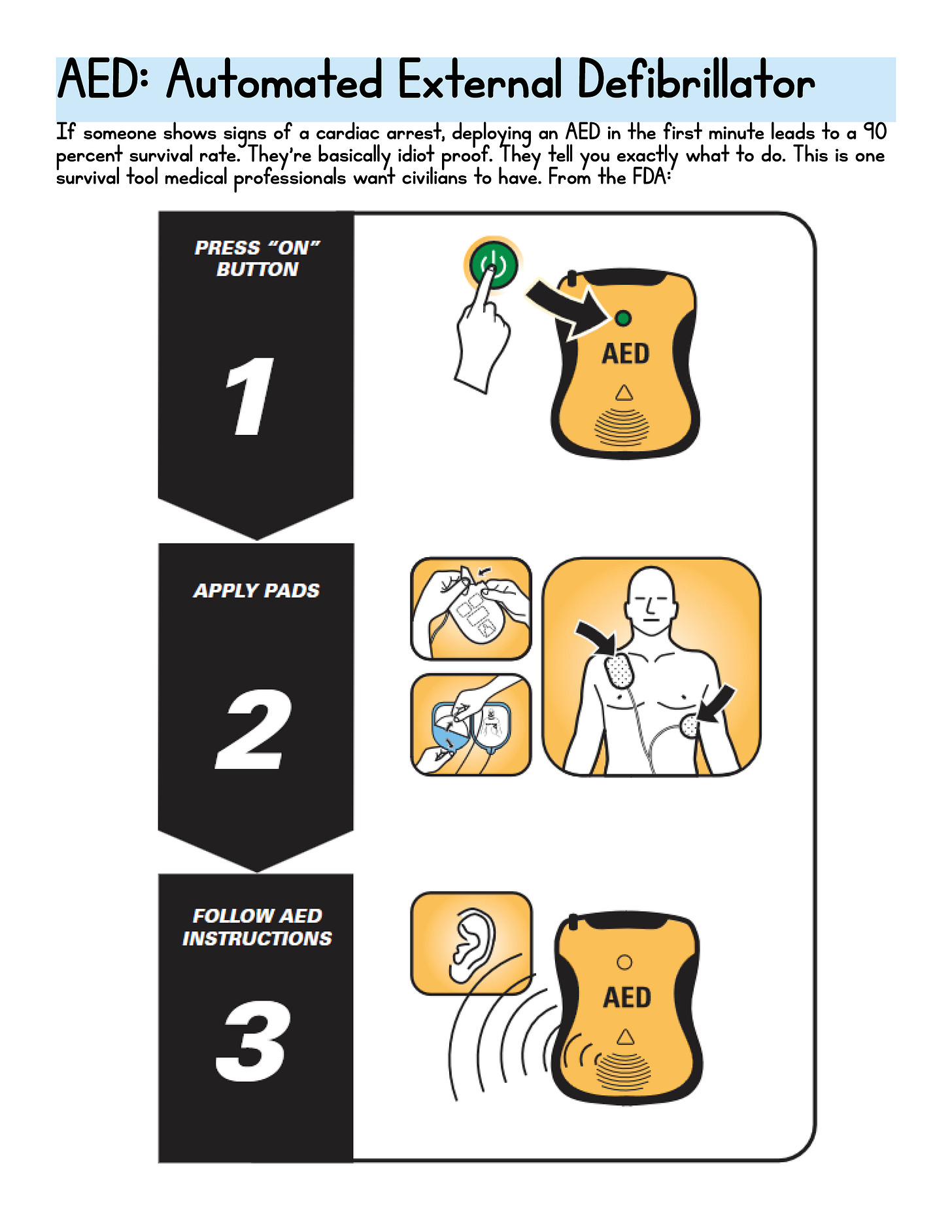
Medical professionals don’t really want us to stockpile antibiotics. They want us to learn how to apply a tourniquet and how to use an AED (automated external defibrillator). Here, the math works in your favor. During realistic disaster scenarios, heart attacks and cardiac arrests soar. If you’ve got expendable income for a “panic pack,” an AED is a better buy. You could even crowdsource one with neighbors or coworkers and keep it in a central spot. Prepper sites don’t talk about them because AED manufacturers don’t offer affiliate deals.
These pages are going into an updated edition of my illustrated survival guide, which you can read more about here.
Do you know any survival myths?
Share yours.
Check out the Kickstarter.
